AI safety is becoming an important topic in 2026. Artificial intelligence is becoming a bigger part of our daily lives. We use AI for writing, research, coding, business, and even financial decisions.
How do we make sure AI is safe?
This is now being discussed by lawmakers in the United States, as concerns grow about the possible risks of advanced AI systems.
Table of Contents
What Are U.S. Lawmakers Discussing?
U.S. lawmakers are discussing whether AI companies should be required to take stronger steps to reduce serious risks from their AI models.
One idea being discussed is a “duty of care” for AI companies. This could mean that companies would have greater responsibility to identify and reduce major risks before their AI systems cause serious harm.
Lawmakers are also considering whether the government should have more power to respond when an AI system is considered particularly dangerous.
Why Is AI Safety Important?
AI can be extremely useful, but it can also create problems when it is misused or when systems behave in unexpected ways.
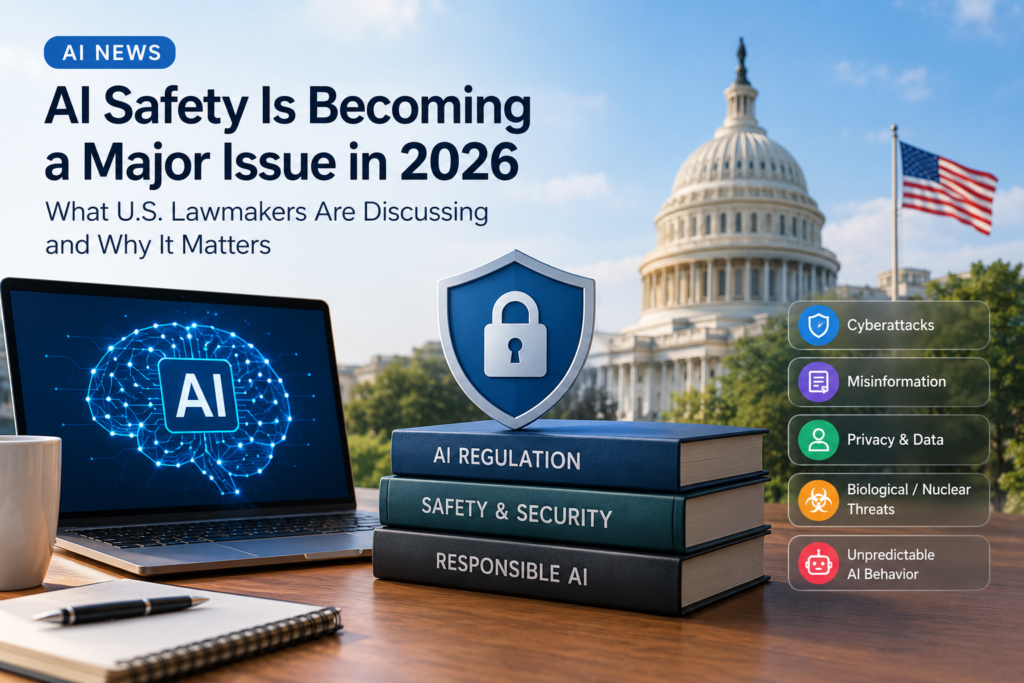
Some of the concerns being discussed include cyberattacks, misinformation, and the possible misuse of advanced AI technology.
The more capable AI systems become, the more important it is to have sensible safety measures in place.
How AI Companies Can Improve Safety
AI companies can improve safety by testing their models carefully before making them widely available. They can also monitor how people use these systems and respond quickly when serious problems are discovered.
Clear information is also important. Users should know when they are interacting with AI and understand that AI-generated answers may sometimes be wrong or misleading.
Better safety does not have to mean stopping AI development. With proper testing, transparency, and responsible use, companies can continue developing useful AI while reducing some of the risks.
What Does This Mean for Normal Users?
For most people, these discussions may not change anything immediately.
You can still use AI tools for writing, learning, research, and everyday tasks. However, it is a good idea to remember that AI is not always correct.
Before making important decisions based on AI-generated information, especially financial or legal decisions, it is better to check the information from reliable sources.
What Could Happen Next?
The discussion around AI safety is still developing, and it may take time before new rules are finalized. U.S. lawmakers are looking at how AI companies can be encouraged to build safer systems without slowing down useful innovation.
For AI companies, this could mean more testing, risk assessments, and responsibility before releasing advanced models. For users, stronger safety rules could eventually mean more transparency about how AI systems work and what risks they may have.
At the same time, AI technology is changing quickly, so creating rules that remain useful in the future will be a challenge. Governments, technology companies, researchers, and users will all have a role to play in making AI safer. This can help build trust and confidence.
Final Takeaway
AI is developing very quickly, and governments are now trying to figure out how to keep up with that development. This can help build trust and confidence.
The goal should not be to stop useful AI innovation. Instead, the focus should be on finding a balance between innovation, responsibility, and safety.
As AI becomes a bigger part of everyday life, AI safety will likely become an even more important topic.
What do you think? Should governments introduce stricter rules for AI companies? Share your thoughts in the comments.
As AI continues to grow, safety should remain part of the conversation. Responsible development can help people benefit from AI while reducing unnecessary risks