
Writing is one of the most common tasks people use artificial intelligence for today. Whether you are writing a blog post, email, product description, social media caption, business document, research summary, or creative story, AI writing tools can help you move from a blank page to a usable draft much faster.
But there is one problem: there are now so many AI writing tools that choosing the right one can be confusing.
Some AI tools are general-purpose assistants that can help with almost any writing task. Others are designed specifically for editing, marketing, SEO content, business communication, or creative writing. A tool that works well for a blogger may not be the right choice for a marketing team or a student.
In this guide, we will look at 10 useful AI writing tools and explain what each type of tool can help you with. We will also cover how to choose an AI writing assistant, how to use AI without making your content generic, and what mistakes you should avoid.
Table of Contents
What Are AI Writing Tools?
AI writing tools are software applications that use artificial intelligence to help users create, edit, improve, organize, or rewrite text.
Depending on the tool, you may be able to use AI for tasks such as:
- Writing blog outlines
- Creating first drafts
- Rewriting paragraphs
- Improving grammar
- Changing the tone of content
- Summarizing long documents
- Brainstorming ideas
- Creating marketing copy
- Writing emails
- Generating social media content
- Editing existing articles
- Organizing research
The important thing to understand is that an AI writing tool does not automatically make every piece of content better.
The result depends on the tool, the instructions you provide, the information you give it, and how carefully you review the final output.
For most important writing, AI works best as an assistant rather than a replacement for human judgment.
Why Are AI Writing Tools So Popular?
Traditional writing can take a significant amount of time.
Before writing a long article, you may need to research the subject, create an outline, decide what to include, write the first draft, edit the language, improve the structure, and check for mistakes.
AI can assist with several of these steps.
For example, you can start with a rough idea and ask an AI writing assistant to turn it into an outline. You can then improve that outline yourself, create a draft, and use AI again for editing.
This creates a workflow where AI helps reduce repetitive work while you remain responsible for the final result.
That approach is often more useful than asking an AI tool to generate an entire article and publishing the result without reviewing it.
10 AI Writing Tools to Know in 2026
The following tools represent different approaches to AI-assisted writing. Instead of looking for one tool that is perfect for everyone, consider which one matches your specific needs.
1. ChatGPT
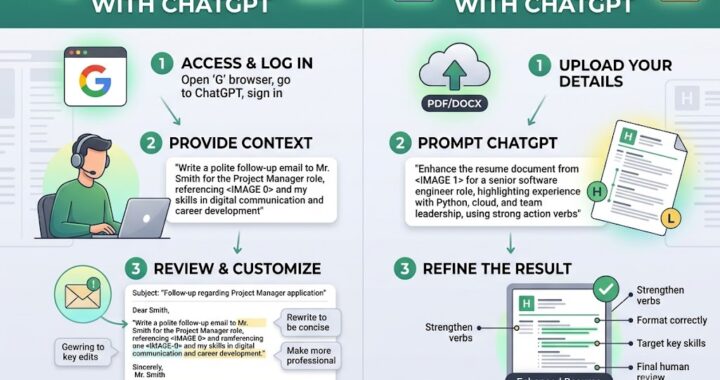
ChatGPT is a general-purpose AI assistant that can be used for many different writing tasks.
It can help with brainstorming, outlines, first drafts, rewriting, editing, summarization, tone adjustment, and other forms of written communication.
One of its biggest advantages is flexibility.
You can use the same type of AI assistant for a short email, a blog outline, a product description, a research summary, or a longer document.
For bloggers and content creators, this flexibility can make it useful throughout the content creation process.
A practical workflow might look like this:
- Choose a topic.
- Ask for possible angles.
- Build an outline.
- Add your own information and experience.
- Create a draft.
- Review and edit the draft.
- Improve clarity and formatting.
- Verify important facts before publishing.
The key is to provide context instead of using extremely short prompts.
For example, instead of asking:
“Write an article about AI.”
You could provide the audience, topic, goal, structure, tone, and information that must be included.
That gives the AI a much clearer assignment.
2. Claude
Claude is another general-purpose AI assistant that can be useful for writing and editing.
It can be used for tasks such as drafting, rewriting, summarizing, brainstorming, and working with longer pieces of text.
Writers who care about maintaining a particular tone may find this type of AI assistant useful for reviewing an existing draft instead of generating everything from scratch.
For example, you could provide a paragraph and ask the AI to make it clearer while keeping the original meaning and tone.
That can be particularly useful when you already have ideas but want help improving the presentation.
3. Grammarly
Grammarly is widely associated with grammar and writing improvement, but modern AI-powered writing assistance can go beyond basic spelling corrections.
Tools in this category can help identify grammar issues, improve clarity, adjust tone, and suggest alternative wording.
This makes an editing-focused writing tool different from a general AI chatbot.
If you already write your own content but want help polishing it, an editing assistant can fit naturally into your workflow.
For example, after writing a blog introduction yourself, you can review the wording and look for areas where sentences are unclear, repetitive, or unnecessarily complicated.
The goal should not be to remove your writing style completely.
Good editing improves communication while preserving the meaning and voice of the original writer.
4. Jasper
Jasper is designed with a strong focus on marketing and business content.
Marketing teams may need to produce many types of content, including advertising copy, campaign messaging, website content, product descriptions, and other branded communication.
For these users, a specialized marketing platform can be more useful than a basic writing assistant.
One important consideration is whether your workflow actually requires specialized marketing features.
If you only need occasional emails or blog outlines, a general-purpose AI assistant may already cover most of your needs.
If you manage repeated marketing workflows and need consistency across brand content, a dedicated platform may make more sense.
5. Copy.ai
Copy.ai focuses heavily on business, marketing, and sales-related workflows.
It can be useful for creating short-form copy, brainstorming marketing messages, and supporting repetitive business communication.
For example, a marketing workflow may involve generating multiple variations of a message for different audiences.
The benefit of this type of tool is workflow specialization.
Instead of starting from a blank chat every time, users can work within a system designed around recurring business tasks.
However, businesses should still review AI-generated copy before publishing it, especially when the content includes product claims, pricing, statistics, or statements about customers.
6. Writesonic
Writesonic is another platform associated with AI-assisted content creation and SEO-oriented workflows.
Tools in this category can be useful for people who create online content regularly and want assistance with research, drafting, optimization, and related content tasks.
For bloggers, the important question is not whether an AI tool can generate thousands of words.
The more useful question is whether it helps you create content that actually answers the reader’s question.
A long article with repetitive paragraphs is not automatically better than a shorter article that gives readers exactly what they need.
Use AI to improve the process, but keep the reader as the main focus.
7. Notion AI
Notion AI brings AI assistance into a workspace where users may already store notes, projects, documents, and other information.
This can be useful if your writing workflow already exists inside a productivity or documentation platform.
For example, you might have meeting notes, project information, content ideas, and drafts in one workspace.
AI assistance can then help summarize information, reorganize notes, generate ideas, or improve written content without requiring you to move everything into another application.
This type of integration can be more valuable than having the most powerful standalone writing model if your main goal is keeping your workflow organized.
8. Sudowrite
Sudowrite is aimed more specifically at creative and fiction writing.
Creative writers often need different features from marketers or business professionals.
A novelist, for example, may care about character development, scene ideas, storytelling, descriptions, and maintaining a creative direction.
A general AI assistant can also help with brainstorming, but a specialized creative writing platform may offer workflows designed specifically around storytelling.
If your main goal is fiction rather than business or informational writing, look for tools that understand the creative process instead of focusing only on short-form marketing copy.
9. Rytr
Rytr is an AI writing platform aimed at helping users create different forms of written content.
Tools in this category can be useful for people who want straightforward AI assistance without building a complicated workflow.
Potential use cases include:
- Emails
- Social media content
- Blog ideas
- Product descriptions
- Short marketing copy
- Rewriting
For beginners, simplicity can be an important feature.
You do not necessarily need a large collection of advanced tools when you are just learning how to use AI for writing.
Start with a tool that handles your main task and expand your toolkit only when you identify a genuine need.
10. Wordtune
Wordtune is focused on rewriting and improving written communication.
This type of tool can be useful when you already have a sentence or paragraph but want to express the idea more clearly.
For example, you may write a sentence that sounds too formal, too complicated, or too repetitive.
An AI rewriting assistant can suggest alternative versions.
This is especially useful when the main ideas are already yours and you simply want help improving how they are communicated.
Which AI Writing Tool Should You Choose?
There is no single AI writing tool that is perfect for everyone.
The right choice depends on your purpose.
If you want a flexible general-purpose assistant, look at tools such as ChatGPT or Claude.
If your main need is editing and improving existing writing, an editing-focused tool such as Grammarly or Wordtune may be more suitable.
If you manage marketing workflows, platforms such as Jasper or Copy.ai may be worth exploring.
If you want SEO-focused content workflows, Writesonic may be relevant.
If you write fiction, a specialized creative writing platform such as Sudowrite may be more appropriate.
The important thing is to choose based on the job rather than popularity.
How to Use AI Writing Tools for Blogging
AI writing tools can be especially useful for bloggers, but there is a right and wrong way to use them.
A simple blogging workflow can look like this:
Step 1: Find a useful topic
Start with a real question your audience wants answered.
Do not begin with:
“Give me 2,000 words.”
Begin with:
“What does my reader actually need to know?”
Step 2: Create an outline
Use AI to organize the major sections of the article.
Then review the outline yourself.
Remove unnecessary sections and add anything the reader needs.
Step 3: Add your own information
This is an important step.
Provide examples, experiences, explanations, original observations, screenshots, comparisons, or other useful information.
This helps make the content more useful than a generic AI-generated article.
Step 4: Draft the content
AI can help turn your outline and information into a readable first draft.
However, the first draft should not automatically be treated as the final version.
Step 5: Edit everything
Read the article yourself.
Look for:
- Repeated ideas
- Incorrect facts
- Generic statements
- Awkward sentences
- Unnecessary paragraphs
- Unsupported claims
- Missing examples
Then improve the content.
Step 6: Optimize for readers and search
SEO should help people find useful information.
Do not repeat the same keyword in every paragraph.
Instead, use natural language and related terms where they genuinely fit.
For example, if your main keyword is “AI writing tools,” your article can naturally discuss AI writing assistants, AI content tools, writing automation, editing tools, and AI-powered writing software.
Can AI Writing Tools Help With SEO?
Yes, AI can assist with parts of the SEO process.
For example, AI can help brainstorm topics, organize an article structure, identify related questions, create title ideas, and improve readability.
But SEO is more than inserting keywords into an article.
A useful search-focused article should answer the user’s question clearly and provide information that is actually helpful.
You should also consider:
- Search intent
- Clear headings
- Helpful internal links
- Descriptive titles
- Readability
- Accurate information
- Original value
- Good page experience
The goal is not to write for a search engine instead of a person.
The goal is to create a useful page that search engines can understand and readers actually want to use.
Are Free AI Writing Tools Good Enough?
For many basic tasks, free AI writing tools can be enough.
You may be able to use a free plan for brainstorming, rewriting short passages, generating ideas, or testing a workflow.
Paid plans can provide additional features, higher limits, or specialized capabilities.
Before paying for a subscription, use the free version when available and determine whether the tool solves a problem you actually have.
There is no benefit in paying for five AI writing subscriptions that all perform the same basic task.
Common Mistakes When Using AI Writing Tools
Publishing AI output without reviewing it
This is one of the biggest mistakes.
AI can generate incorrect information, repetitive writing, or statements that sound convincing but are not properly supported.
Always review important claims.
Using the same generic prompt for everything
A vague prompt often produces a generic result.
Give the AI context, audience, purpose, tone, structure, and important information whenever possible.
Adding too much unnecessary content
A 2,000-word article is not automatically better than a 1,000-word article.
Every section should have a purpose.
If a paragraph does not help the reader, consider removing it.
Forgetting your own voice
AI-generated writing can sound similar across many websites.
Add your own examples, explanations, experiences, opinions where appropriate, and editorial perspective.
Depending on AI for facts
AI can help organize information, but important facts should be verified.
This is especially important for subjects involving money, health, law, technology specifications, pricing, and current events.
How to Write Better Prompts for AI Writing Tools
A useful prompt usually includes five things:
Task + Context + Audience + Format + Constraints
For example:
“Create an outline for a beginner-friendly article about AI writing tools. The audience is new bloggers. Explain the differences between general AI assistants, editing tools, and marketing platforms. Use clear H2 headings and avoid unnecessary technical language.”
This is much more specific than:
“Write about AI writing tools.”
You can then improve the output through multiple revision steps.
Ask the AI to:
- Make the introduction clearer
- Remove repetition
- Simplify complicated sentences
- Add examples
- Improve the structure
- Identify unsupported claims
- Suggest questions readers may have
This turns AI into a writing partner rather than a one-click content generator.
Final Thoughts
AI writing tools can make writing faster, but speed is not the only thing that matters.
The best AI writing workflow combines artificial intelligence with human judgment.
Use AI for brainstorming, outlining, drafting, rewriting, research assistance, editing, and repetitive tasks. Then review the result, verify important information, add your own value, and make sure the final piece genuinely helps the reader.
There are many AI writing tools available in 2026, and they serve different purposes.
General-purpose assistants can help with a wide range of tasks. Editing tools can improve existing writing. Marketing platforms can support business workflows. Creative writing tools can help storytellers. SEO-focused platforms can assist with content workflows.
Instead of asking which AI writing tool is universally the best, ask a more useful question:
“What do I need to write, and which tool can help me do that task better?”
Once you answer that question, choosing the right AI writing tool becomes much easier.
Frequently Asked Questions
What are AI writing tools?
AI writing tools are software applications that use artificial intelligence to help users create, edit, rewrite, summarize, organize, or improve written content.
What is the best AI writing tool for bloggers?
The right choice depends on the blogger’s workflow. A general-purpose AI assistant can help with brainstorming and drafting, while specialized tools may provide additional editing, marketing, or SEO features.
Can AI writing tools write blog posts?
Yes, AI writing tools can help create blog outlines and drafts. However, bloggers should review the content, verify important information, add original value, and edit the final article before publishing.
Are AI writing tools free?
Some AI writing tools offer free plans or limited free access. Paid plans may provide additional features or higher usage limits. Pricing and plans can change, so check the provider’s current information before subscribing.
Can AI writing tools improve grammar?
Yes. Some AI writing assistants are specifically designed to help identify grammar, spelling, clarity, tone, and style issues.
Are AI writing tools good for SEO?
AI can help with SEO-related tasks such as topic brainstorming, outlines, keyword ideas, and editing. However, good SEO content should focus on search intent, accuracy, usefulness, originality, and the needs of readers rather than keyword repetition.
Should I use multiple AI writing tools?
You can, but you do not need many tools. Start with one tool that solves your main writing problem and add another only when it provides a useful capability that your existing tool does not offer.
Can AI replace human writers?
AI can automate or assist with many writing tasks, but human review remains important for accuracy, context, originality, judgment, and communication. For important content, AI is best treated as an assistant rather than an unquestionable final authority.


[…] Part 1: How to Write a Professional Email with ChatGPT […]